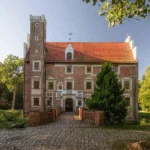
Eastern Europe has long been a cradle of rich literary traditions, from the philosophical depths of Dostoevsky and the modernist innovation of Kafka to the poetic brilliance of Wisława Szymborska. Despite political turmoil and social upheaval throughout history, writers from this region have continually produced literature that speaks universally while being deeply rooted in local culture and experience. It is in this context that the Eastern European Writers University (EEWU) emerges—not merely as an academic institution, but as a cultural and intellectual hub for aspiring writers, literary scholars, and cultural historians of Eastern Europe.
Foundation and Vision
Established in response to a growing need for specialized literary education in Eastern Europe, the Eastern European Writers University was founded with a mission to preserve, promote, and reinvent the literary legacies of the region. The university envisions itself as a beacon of creative freedom, linguistic diversity, and literary excellence. Located in a culturally significant city—perhaps Kraków, Vilnius, or Belgrade—the university provides a haven for writers and scholars alike.
EEWU’s foundational philosophy is rooted in the belief that literature plays a critical role in shaping national identity, fostering cross-cultural understanding, and providing a platform for social critique. The institution aims to bridge the gap between traditional literary forms and contemporary innovations, while encouraging its students to find their unique voices.
Academic Structure
Eastern European Writers University offers a comprehensive academic structure divided into several schools: the School of Creative Writing, the School of Literary History and Theory, the School of Translation Studies, and the School of Digital and Comparative Literature. Each school collaborates to provide students with a well-rounded education that combines creativity with critical analysis.
1. School of Creative Writing
The heart of the university lies in its Creative Writing program, where students are guided through fiction, poetry, drama, and memoir. The curriculum is designed to develop narrative technique, stylistic maturity, and an understanding of cultural context. Faculty include award-winning novelists, poets, and playwrights from across Eastern Europe, many of whom teach in multiple languages to honor the region’s linguistic diversity.
Workshops are small and intimate, emphasizing peer review and mentorship. Students are encouraged to draw inspiration from their heritage, history, and personal experiences—whether they are from the Carpathian highlands or the plains of Hungary.
2. School of Literary History and Theory
This school offers deep dives into Slavic, Balkan, Baltic, and Central European literatures. Students examine canonical authors like Tolstoy, Bulgakov, Kundera, and Andrić, alongside lesser-known but equally important voices such as Danilo Kiš, Olga Tokarczuk, and Magda Szabó.
Theoretical frameworks include post-colonialism, feminist theory, structuralism, and existentialism, with a special focus on how these intersect with Eastern European realities. Students also explore the impact of political ideologies such as communism, nationalism, and liberalism on literary production.
3. School of Translation Studies
Given the multilingual nature of Eastern Europe, translation is not just a skill but an essential cultural bridge. The Translation Studies program trains students to translate both into and out of regional languages, with a focus on literary nuance, idiomatic sensitivity, and historical context.
Students work on translating poetry, prose, and drama, gaining hands-on experience through collaborative projects with publishing houses, literary journals, and cultural institutions.
4. School of Digital and Comparative Literature
In a rapidly digitalizing world, EEWU recognizes the importance of new media in shaping literature. This school explores the interface between traditional literary forms and digital platforms—such as blogs, podcasts, interactive fiction, and AI-generated literature. Comparative courses invite students to analyze Eastern European texts alongside global literature, revealing universal themes and regional particularities.
Language and Diversity
EEWU prides itself on being a multilingual institution. Courses are offered in English, Russian, Polish, Ukrainian, Czech, Hungarian, and other regional languages. This linguistic inclusivity reflects the multicultural makeup of Eastern Europe and allows students from diverse backgrounds to access and contribute to the literary conversation.
Furthermore, the university welcomes international students, fostering an environment of global exchange and collaboration. Writers from Western Europe, Asia, Africa, and the Americas often attend workshops or residencies, bringing fresh perspectives and forming lifelong partnerships with their Eastern European counterparts.
Research and Archives
EEWU is home to one of the largest archives of Eastern European literary manuscripts, letters, and rare books. The University Library houses collections from dissident writers during the Cold War, underground literary journals, and banned publications from the Soviet era.
Research fellows from around the world are invited to study these collections, contributing to scholarly work that keeps these important voices alive. The university also sponsors digitization projects, making these resources available to a global audience.
Cultural Activities and Festivals
EEWU is not just a place of study—it is a living cultural center. The campus regularly hosts literary festivals, translation marathons, book fairs, and public lectures. Annual events like the Eastern European Writers Week bring in acclaimed authors, publishers, critics, and readers for discussions, readings, and networking.
Students can participate in writing competitions, drama productions, and literary podcasts. The university also supports a vibrant student-run literary journal, published in multiple languages, showcasing emerging talents and experimental writing.
Social Responsibility and Literary Activism
A unique aspect of Eastern European Writers University is its commitment to literary activism. The university supports projects that address issues like migration, minority rights, gender inequality, and freedom of expression. Workshops and partnerships with NGOs help students use their writing for social impact.
The Writing for Justice initiative is one such program, empowering students to document real-life stories of marginalized communities, particularly the Roma, refugee populations, and political prisoners. Through this work, the university reinforces the role of literature as both witness and weapon.
Alumni and Influence
Graduates of EEWU go on to become celebrated authors, editors, translators, educators, and cultural policymakers. Many have won national and international literary awards and have their work translated into multiple languages. More importantly, they serve as cultural ambassadors for Eastern European literature, promoting its richness and relevance on the global stage.
The university’s influence is also felt in the literary marketplace. Through partnerships with publishers and literary agents, EEWU helps ensure that the next generation of Eastern European writers finds an audience both at home and abroad.
Conclusion
In a time when cultural homogenization threatens to overshadow local voices, the Eastern European Writers University stands as a beacon of literary diversity, intellectual rigor, and creative expression. It is more than just an academic institution—it is a sanctuary for storytelling, a forge for future literary icons, and a tribute to the enduring power of words born in the heart of Europe.